Gallery


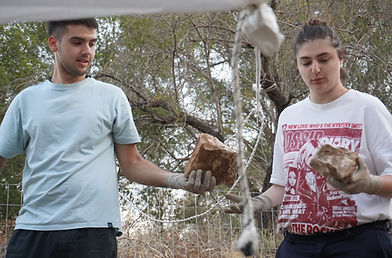
In the field of excavation, where the earth becomes an archive and the silence of history is gradually translated into discourse, students stand as mediators between past and present. Armed with trowels and guided by methodological rigor, they measure, record, document; each stratigraphic layer is not merely soil but a bearer of memory, a field of interpretive possibility demanding precision, patience, and theoretical alertness. Their labor is physically exacting—the sun, the dust, the repetition of movement test endurance—yet within this demanding rhythm emerges a profound sense of solidarity. Excavation is never an individual triumph but a collaborative act in which mutual support and companionship form the unspoken foundation of research: a shared glance of understanding, a steady hand at the sieve, a collective hypothesis formed around a newly revealed find. Every artifact—whether a potsherd, a coin, or the faint trace of a wall—constitutes not only material evidence for analysis but also a spark of joy and exhilaration, a moment in which theory meets matter in an unexpected encounter. Here scholarly discipline converges with passion; meticulous documentation is accompanied by the quickened pulse of discovery. Their dedication extends beyond the trench into field notebooks, drawings, and evening discussions that linger long after the tools are set aside, reflecting a deep commitment to understanding the human past and an awareness that even the smallest fragment may reshape interpretation or reconfigure historical narrative. Through hard work, collective effort, enthusiasm, and unwavering devotion to inquiry, the students do more than uncover remnants of earlier worlds; they shape themselves as researchers and as a community, embodying a shared passion that binds knowledge to lived experience.